
CPD Logging
Turn rough CPD notes into structured records
CPD often starts as rough notes, evidence, files, screenshots, web links or a memory of learning that happened days or weeks ago. HandyCPD helps organise that material into a structured CPD log you review, edit and approve, turning informal input into a clear professional development record.
AI helps organise the draft, but you review, edit and approve the record before filing it.
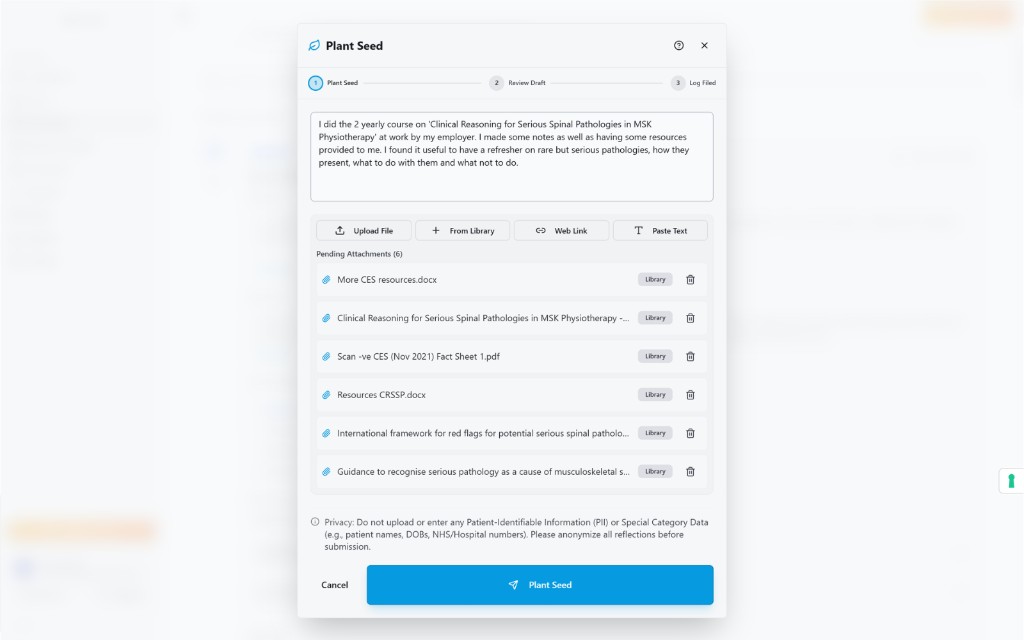
Start with Plant a Seed
You can start from typed notes, uploaded files, library evidence, web links or pasted text. Attach supporting material as you go: certificates, resources, anonymised notes or links to further reading. Start messy, then review carefully.
You do not need a polished CPD entry to begin. A rough note is enough to start, as long as you review and correct the draft before filing.
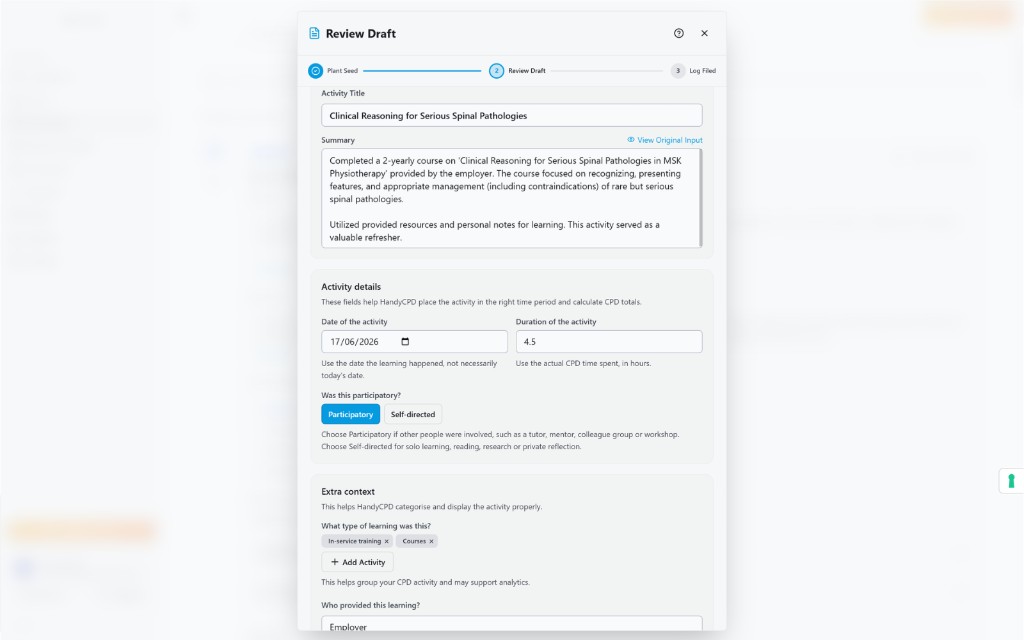
HandyCPD organises the draft CPD log
From your seed and attachments, AI may suggest a structured draft CPD log. Suggestions can include a title, summary, activity date, duration or time taken, provider, participatory or self-directed status, activity type, tags for analytics and relevant professional standards. HandyCPD helps organise the draft. It does not guarantee perfect extraction from every note or file.
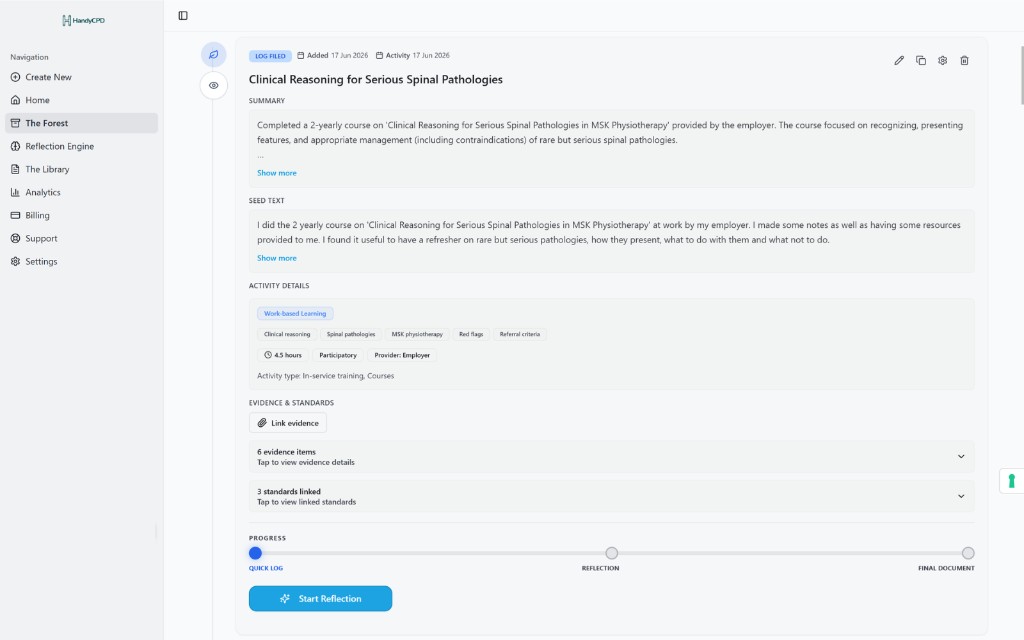
See the full CPD record
Once filed, the detailed CPD log card can show your original seed text alongside the approved summary, activity details, linked evidence, mapped standards and progress toward reflection or a final document. Evidence stays connected to the learning event for later review.
Once a CPD log is filed, it can become the starting point for a structured reflection in the Reflection Engine.
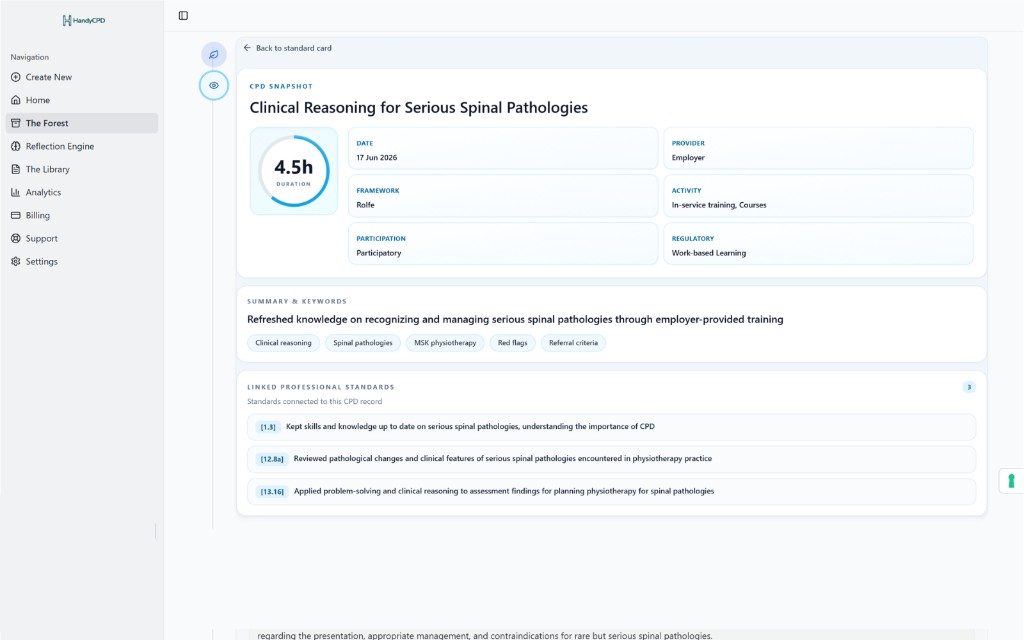
Use CPD Snapshot for a clearer view
CPD Snapshot offers a cleaner visual summary of a filed record: duration, date, provider, framework, activity type, keywords and linked standards at a glance. It is useful when you want a quicker review or an easier way to return to a record later without opening every detail.
Who CPD logging can help
CPD logging can support professionals who forget to record learning until later, keep evidence scattered across emails and files, prepare for HCPC CPD audit, revalidation, renewal or appraisal, or learn through everyday practice rather than only formal courses. If your CPD activity record keeping feels reactive or fragmented, a structured logging workflow may help.
HandyCPD works best when your seed includes real context: what happened, why it mattered, approximate time spent, who provided the learning and any supporting evidence.
Review and edit before filing
Nothing is final until you confirm it. You can correct AI guesses, adjust dates and durations, change categories and refine wording. You remain responsible for the accuracy of every CPD record you file. Avoid including patient, client or service-user identifiable, confidential or special-category data unless you have a lawful basis and understand the risks.
Built for reflection and analytics
Structured CPD logs feed the Reflection Engine, where filed records can become the starting point for guided reflective CPD records you review and approve. Your CPD Dashboard shows recent activity and records in progress at a glance. Tags and categories support CPD analytics; standards mapping supports portfolio review; and evidence remains connected to each activity. For guidance on what comes next, see how to write a CPD reflection. CPD PDF export and the Evidence Library are related outcomes, useful when you need a portable summary or a central view of attachments, but CPD logging itself is about turning rough input into records you own and approve.
Ready to turn rough CPD notes into structured records?
Start with a quick note, review the draft and file CPD records you stay in control of.
30-day Pro trial. No card required.